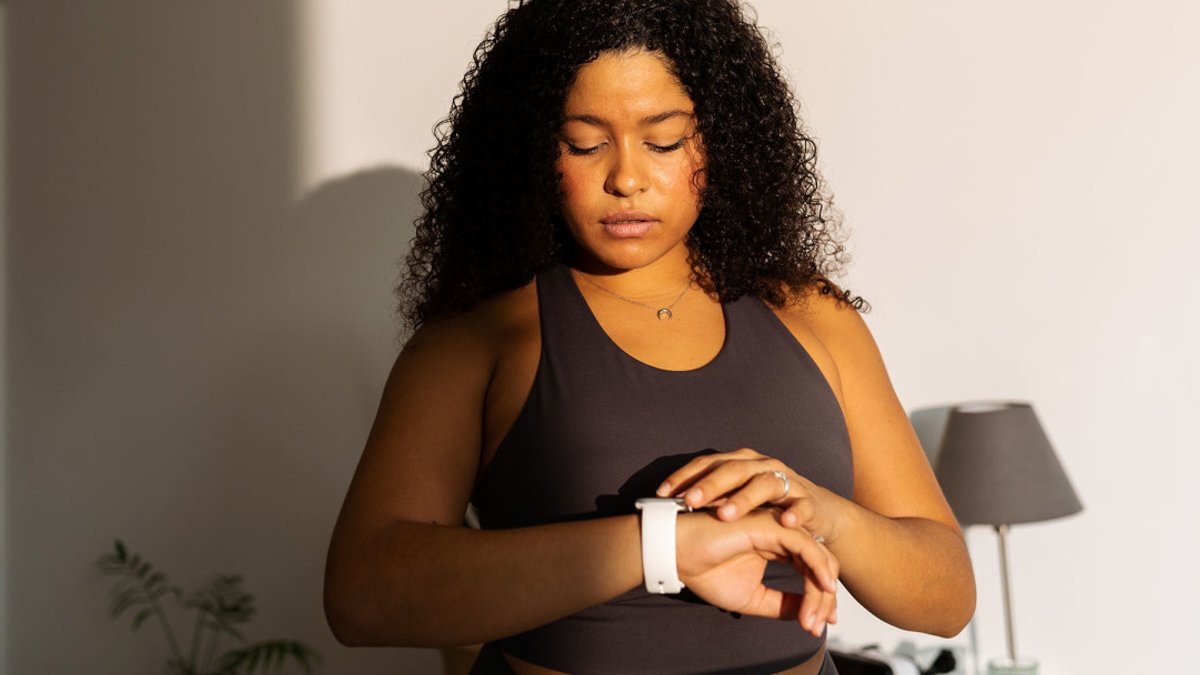
Most people check their sleep score each morning, trusting the number to reflect reality. According to the American Academy of Sleep Medicine, nearly half of American adults have used some kind of sleep-tracking device. But new research suggests the numbers on your wrist might be telling a slightly rosier story than what’s actually happening while you sleep.
Comparing the Numbers
Researchers followed 107 patients at a sleep clinic over the course of eight nights. Each patient wore a MotionWatch 8 actigraphy device (a research-grade sleep tracker that measures movement) while simultaneously undergoing polysomnography, the gold-standard test that tracks brain waves, breathing, and eye movement to determine exactly when someone is asleep or awake.
The correlation between the two methods was strong when it came to total sleep time, meaning the tracker’s overall ballpark wasn’t wildly off. But when it came to more complex measures, like fragmented sleep or restlessness, the correlation was much weaker. Across the board, the wearable device didn’t quite match what was happening in the sleep lab.
Trackers overestimated total sleep time by an average of 27 minutes and overestimated sleep efficiency (the percentage of time in bed actually spent asleep) by about 6%. On the flip side, they underestimated time spent awake by about 15 minutes. The research shows that the tracker might get the big picture close to right, but it struggles with the finer details of how choppy or smooth your night actually was.
Read Also: Blood test may predict better TBI recovery outcomes
It is also worth noting that this study was conducted in a sleep clinic, meaning participants were already being evaluated for potential sleep issues, so results may not perfectly mirror what a healthy sleeper without sleep concerns would see.
Outside Factors
Accuracy wasn’t uniform across all participants. Age played a role, with tracking accuracy shifting as participants got older. Periodic limb movements, a common issue in which the legs twitch or jerk during sleep, also affected how well the device’s readings lined up with the lab results.
Setting also impacted sleep scores. The same device produced different results depending on whether someone was sleeping in the unfamiliar environment of a sleep lab versus their own bed at home. This is likely less of a problem with the device, but rather evidence that the where you are sleeping can shift the numbers you see. It is hard to compare a night in a hotel to a night in your own bedroom.
Using the Data
Based on this research, it appears a lot of us are checking a number each morning that likely skews a bit optimistic, especially when it comes to how much of the night was spent tossing and turning versus soundly asleep. That is not a reason to give up on your tracker and toss it in a drawer. It is simply useful context for how much weight to give any single night’s score.