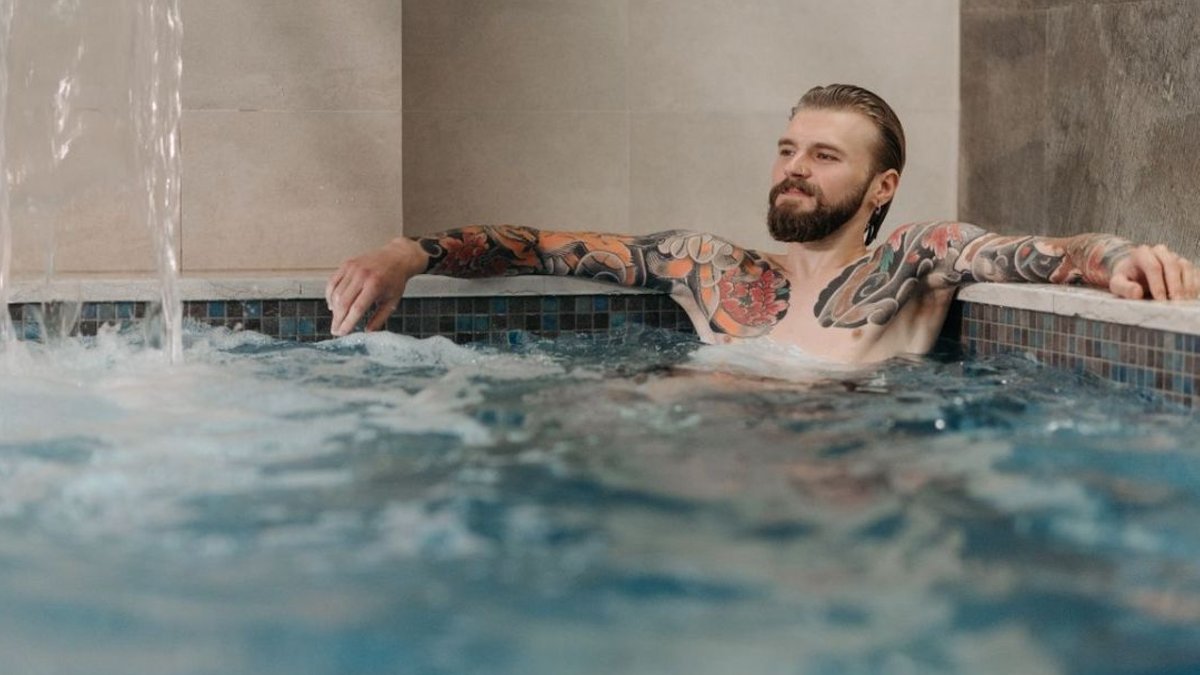
A recent study published in the Journal of Thermal Biology set out to determine whether cold plunges are effective for post-exercise recovery. The research, led by Dr Freya Bayne, Lecturer in Sport and Exercise Science at the University of East London, found that hot water immersion helps muscles recover more than cold water.
The study involved 40 fit and healthy adults who were randomly split into four groups to test the effects of different recovery strategies on muscle function and soreness. Each participant performed a set of eccentric knee exercises designed to trigger delayed onset muscle soreness (DOMS).
Cold Water on a Hot Idea
The team measured various markers of muscle recovery, including maximal voluntary contractions, creatine kinase levels, and inflammatory markers. They found that the hot water group had muscle function 10% lower than the baseline, while the cold water group had muscle function 18% lower. The difference between the control group and the hot bath/hot air groups was not statistically significant.
The results for creatine kinase levels in muscles were similar, with the hot bath and do-nothing control groups showing a return to normal levels after 48 hours, while the cold plunge group still had raised levels after 72 hours. This suggests that the cold water bath treatment may have actually delayed muscle recovery.
In terms of inflammation, the study found that hot water baths were more effective in reducing levels of the enzyme IL6, a marker of inflammation. The hot water group had IL6 levels return to 22% above baseline after 24 hours, compared to 39% and 90% for the cold plunge and control groups, respectively.
Recovery Treatments and Measurement Schedule
Researchers first measured maximal voluntary contractions to ensure comparable muscle fatigue across participants. They repeated function, inflammation, and perception tests immediately after the eccentric knee protocol. Ten volunteers entered a cold bath for 15 minutes at 9 °C. Another ten spent 30 minutes in a 42 °C bath.
Ten participants received a 30-minute exposure in a 30 °C room. The final ten stayed in a typical room near 21 °C. Measurements were taken again immediately after each recovery treatment. Additional assessments occurred the next day, the following day, and around 72 hours after the exercise session. Each follow-up assessment recorded the same functional, inflammatory and perceptual outcomes as the baseline tests. No adverse events were reported during any recovery condition.
Taking the Plunge
According to the study, the participants who took a hot bath or did nothing showed similar levels of muscle function and soreness after 72 hours. The researchers took measurements using a dynamometer to assess muscle strength and found that by 72 hours post-treatment, muscle strength had returned to almost baseline measures in all groups.