
“`html
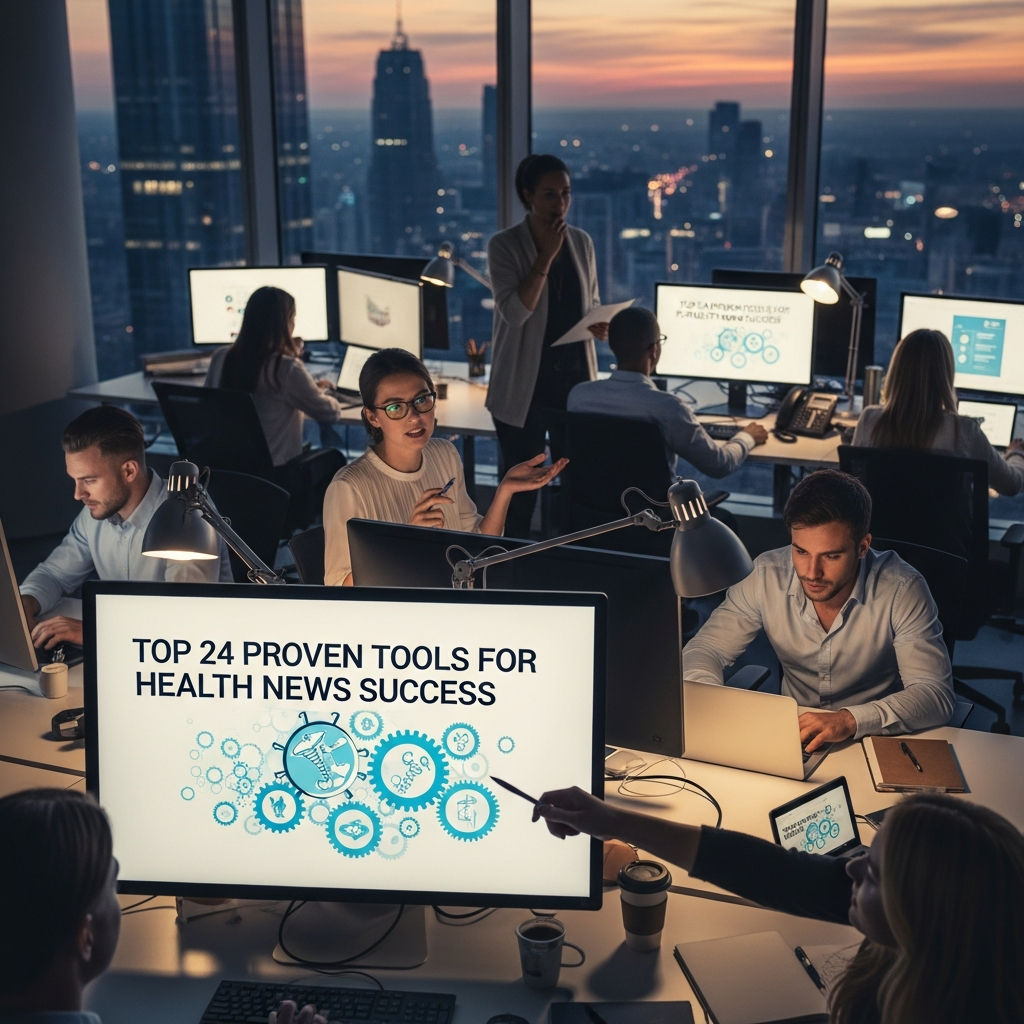
Top 24 Proven Tools for Health News Success
In the digital age, health news is one of the most competitive and scrutinized niches on the internet. Whether you are a medical journalist, a healthcare blogger, or a digital marketer for a clinic, your content must adhere to high standards of accuracy, authority, and engagement. Google’s “Your Money Your Life” (YMYL) guidelines mean that search engines demand the highest level of Experience, Expertise, Authoritativeness, and Trustworthiness (E-E-A-T).
To navigate this landscape, you need more than just good writing skills; you need a robust tech stack. From fact-checking and data visualization to SEO and distribution, here are the top 24 proven tools for health news success in 2024.
1. PubMed / NCBI
Success in health news begins with credible sourcing. PubMed is the gold standard for accessing peer-reviewed biomedical literature. Before publishing any claim, cross-referencing it with studies on PubMed ensures your content is grounded in scientific evidence, which is the cornerstone of health news integrity.
2. SEMrush
To achieve visibility, you must understand what your audience is searching for. SEMrush allows you to conduct deep keyword research, analyze competitor health sites, and track your rankings. It is particularly useful for identifying “People Also Ask” questions that help you address specific patient concerns.
3. Clearscope
SEO for health news is no longer just about keywords; it is about semantic richness. Clearscope uses AI to analyze top-ranking content and suggests relevant entities and terms you should include. This helps search engines recognize your content as a comprehensive resource on a medical topic.
4. Canva
Health news often involves complex concepts. Canva’s user-friendly design interface allows you to create infographics, anatomy diagrams, and social media tiles. Visual aids increase the dwell time on your page—a key metric for SEO success.
5. Flourish
If you are reporting on health statistics, such as disease prevalence or vaccine rates, Flourish is an essential tool. It allows you to create interactive charts and “scrollytelling” data visualizations that make dry medical data engaging for the general public.
6. BioRender
For more technical health news outlets, BioRender is a game-changer. It is the “Canva for science,” providing thousands of pre-drawn icons for cells, pathways, and medical equipment. It allows you to create professional-grade scientific illustrations that build immense authority with your readers.
7. Google Trends
Health news is often seasonal or reactive (e.g., flu season, new FDA approvals). Google Trends helps you identify “breakout” topics in real-time, allowing you to pivot your editorial calendar to capture current search interest before the market becomes saturated.
8. AnswerThePublic
Health news success often comes from answering the “Why” and “How.” AnswerThePublic visualizes search queries into a cloud of questions. This is perfect for brainstorming health guides that address the specific anxieties and curiosities of patients.
9. Grammarly
Grammar and spelling errors are a fast track to losing credibility in the medical space. Grammarly’s advanced checks go beyond typos, helping you maintain a tone that is professional yet accessible to a lay audience.
10. Hemingway Editor
Medical jargon can easily alienate readers. The Hemingway Editor highlights complex sentences and passive voice. For health news success, your content should ideally aim for a 6th to 8th-grade reading level to ensure maximum accessibility.
11. BuzzSumo
To see what health stories are going viral, use BuzzSumo. It tracks social media engagement across platforms, helping you understand which health topics (e.g., mental health, longevity, nutrition) are currently resonating with audiences and influencers.
12. Feedly
Staying ahead of the curve requires monitoring hundreds of medical journals and news outlets. Feedly is an RSS aggregator that allows you to organize your sources into “Health,” “Pharma,” or “Wellness” feeds, ensuring you never miss a breaking story.
13. Exploding Topics
If you want to be the first to report on a new supplement or health trend, Exploding Topics is the tool for you. It uses AI to identify trends that are gaining traction before they go mainstream, giving you a significant head start on SEO.
14. FactCheck.org (SciCheck)
Misinformation is the enemy of health news success. The SciCheck feature on FactCheck.org focuses specifically on debunking false scientific claims. It is an invaluable resource for journalists who want to provide a “reality check” to trending health myths.
15. Yoast SEO
For those using WordPress, Yoast SEO remains a fundamental tool. It helps you optimize meta descriptions, titles, and schema markup. For health news, using the “Article” or “MedicalWebPage” schema via Yoast can help Google better categorize your content.
16. Otter.ai
Interviewing medical experts is a daily task for health reporters. Otter.ai provides real-time transcription, allowing you to focus on the conversation rather than taking notes. This ensures that expert quotes are captured accurately—crucial for maintaining trust.
17. Hunter.io
To get a quote from a busy surgeon or researcher, you first need to reach them. Hunter.io helps you find the professional email addresses of experts at universities and hospitals, streamlining your outreach process.
18. Substack
Building a direct relationship with your audience is vital. Substack has become a powerhouse for health news creators to build newsletters. It allows you to own your audience, bypassing the volatility of social media algorithms.
19. Mailchimp
For more established health news brands, Mailchimp offers advanced automation. You can segment your audience so that people interested in “Diabetes News” receive different updates than those interested in “Sports Medicine,” increasing your click-through rates.
20. Hootsuite
Consistency is key to social media success. Hootsuite allows you to schedule your health news updates across Twitter, LinkedIn, and Facebook simultaneously, ensuring your brand stays top-of-mind for your followers.
21. LinkedIn
While often overlooked as a “tool,” LinkedIn is the premier platform for health news distribution. It is where medical professionals and healthcare executives congregate. Sharing deep-dive articles here can establish you as a thought leader in the industry.
22. Google Search Console
To measure health news success, you must monitor your “vitals.” Google Search Console tells you exactly which keywords are driving traffic and alerts you to technical issues that could prevent your medical content from ranking.
23. Altmetric
Altmetric tracks the “impact” of scientific papers beyond just citations. It shows you how often a specific study is being mentioned in the news and on social media. For a health news writer, this helps identify which new studies are worth covering based on their public conversation potential.
24. SurferSEO
SurferSEO provides a “Content Score” based on real-time SERP data. It tells you the ideal word count, image count, and heading structure for your health news article to beat the current top-ranking pages. It takes the guesswork out of technical SEO.
Conclusion: Building Your Health News Arsenal
Success in health news is a marathon, not a sprint. It requires a delicate balance of scientific accuracy and digital marketing savvy. By integrating these 24 tools into your workflow, you can streamline your research, enhance your content’s visual appeal, and ensure that your expert health advice reaches the people who need it most.
- For Accuracy: Rely on PubMed and FactCheck.org.
- For Growth: Use SEMrush and Clearscope.
- For Engagement: Leverage Canva, Flourish, and Substack.
In a world of “fake news,” the health news outlets that utilize these professional tools will be the ones that earn the public’s trust and achieve long-term digital success.
“`