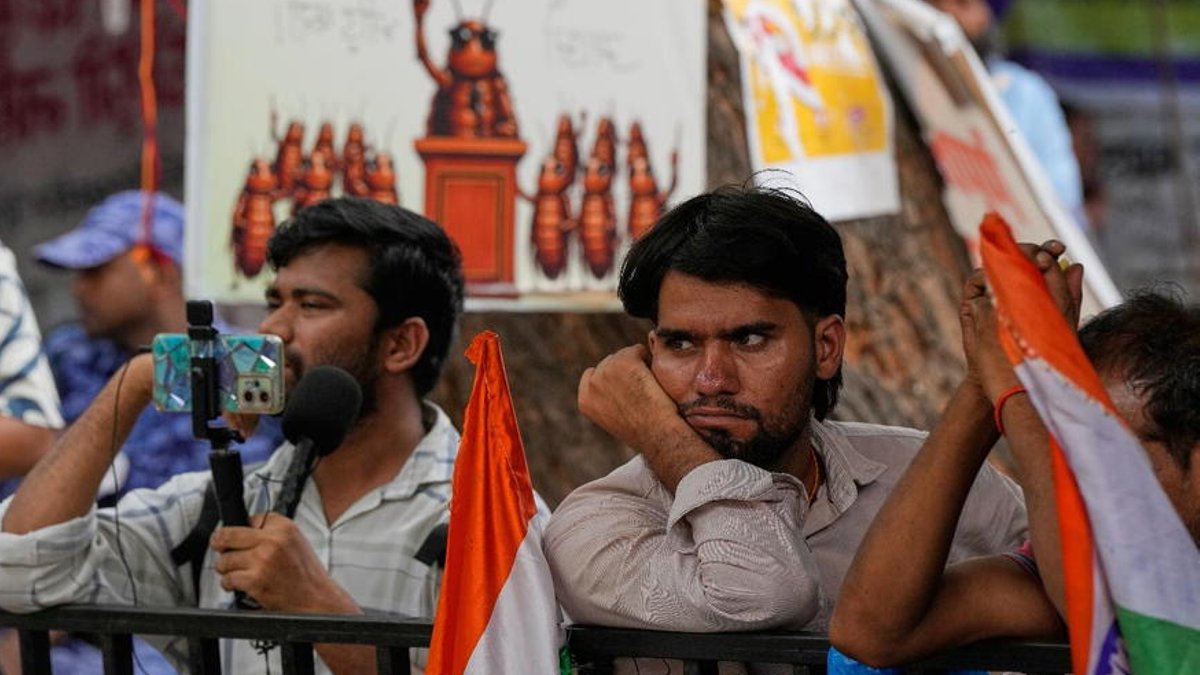
India’s Gen Z “Cockroach Janta Party” has moved from online outrage to the streets, rallying around a hunger strike led by environmental activist Sonam Wangchuk. The movement began after a Supreme Court justice referred to some unemployed youth as “cockroaches,” a phrase supporters adopted as a badge of resilience to highlight systemic failures in education.
Supporters transformed the insult into a satirical political campaign, amassing more than 21 million Instagram followers within days. The group, led by Boston University student Abhijeet Dipke, is demanding the resignation of the education minister, Dharmendra Pradhan, over alleged paper leaks in competitive exams. The movement has grown into a broader push for accountability, including reforms to the examination system and compensation for families of students who died by suicide.
Related: Baltics Fear Russian Attack on NATO Territory
While online popularity is high, on-the-ground support in New Delhi remains modest. Most days, a few hundred people gather at Jantar Mantar for a sit-in, with crowds swelling to around 1,000 by evening. Many have endured weeks of monsoon rain, sleeping in tents near police barricades. Unlike established political parties, this group has no formal structure; supporters pay their own way to the capital and camp at the designated protest ground.
The presence of Wangchuk, a well-known climate activist, shows how the protest has drawn professionals beyond the world of education. IT professional Ajay Zingade, who is no longer a student, joined the demonstrations because recurring paper leaks compelled him to act. “I am just exercising my fundamental right of dissent,” he said. High-profile attention is growing, with opposition leaders and Bollywood celebrities visiting the camp in recent days.
The movement’s survival depends on pressure, and organizers say the government’s silence has only hardened their resolve. “There has been no kind of response from the government. They have left Sonam Wangchuk to die,” Dipke said. The education ministry did not respond to questions from the Associated Press, and senior leaders in Prime Minister Narendra Modi’s government have largely dismissed the protests.
Related: A list of all the products you can use to deal with your incontinence!
Government officials argue that while student concerns deserve attention, there is no need for negotiations. This stance has frustrated organizers, who view the lack of dialogue as a failure of democratic accountability. “In a democracy the government is supposed to listen to the people, to have a dialogue with the people, and more importantly to be answerable to the people,” Dipke said.
The group plans to escalate its campaign with a march to Parliament on Monday. Wangchuk said the goal is to bring demands directly to lawmakers. “We hope that government is sensible enough to reward peaceful ways rather than wait for not-so-peaceful ways,” he said. Dipke added that they are prepared to continue the demonstrations for as long as it takes, noting that the government underestimated their staying power. “The government was thinking that maybe if they ignore us: These are kids, they will go back home. But I think we have proved that we are here for the long battle, and we are not going to go back home,” he said.